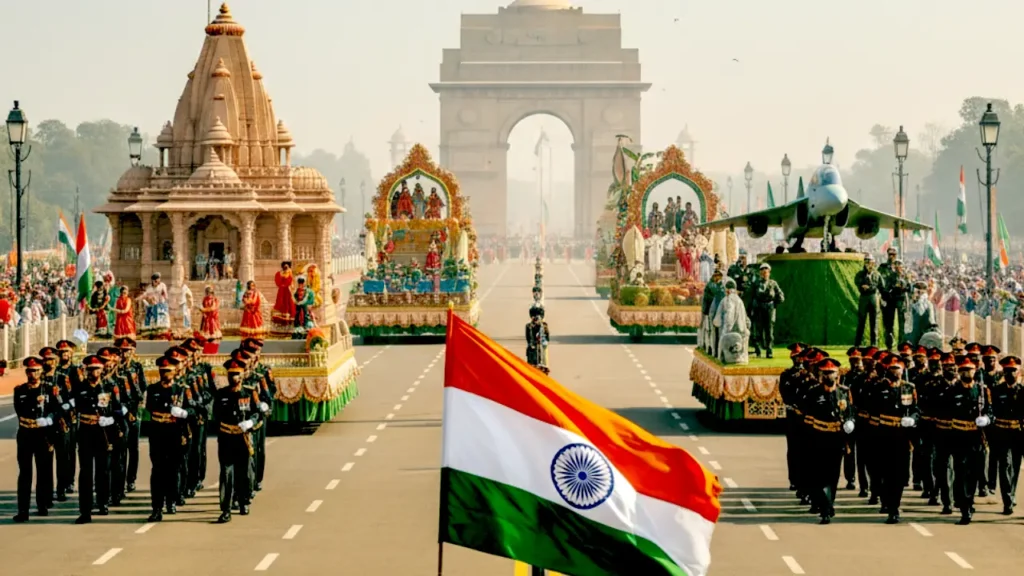

Constitution of India : The Living Soul of Our Republic 1950
Article By – Shreya Bhargava
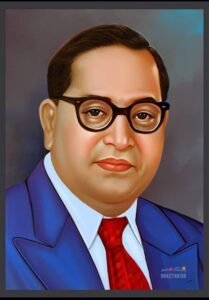
“संविधान केवल वकीलों का दस्तावेज़ नहीं है, यह जीवन को दिशा देने वाला माध्यम है।”
- डॉ. भीमराव अंबेडकर
1. The True Meaning of Republic Day
On the 77th Republic Day, we do not merely celebrate the Indian nation
We celebrate the Constitution that gave India:
Its voice
Its values
Its vision
The journey of the Indian Constitution is a story of:
Struggle
Sacrifice
Deep debate
Far-sighted leadership
2. Formation of the Constituent Assembly
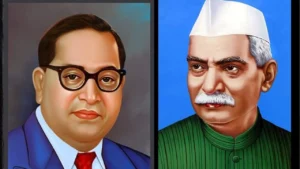
The Constituent Assembly of India was formed in November 1946
The first meeting was held on 9 December 1946
Dr. Rajendra Prasad was elected as the President of the Constituent Assembly
Dr. B. R. Ambedkar, as Chairman of the Drafting Committee, played the most crucial role
Dr. Ambedkar ensured that the Constitution became:
Not just a legal framework
But a foundation of social justice
3. Key Constitutional Dates
Date of Adoption: 26 November 1949
Date of Enactment (Republic Day): 26 January 1950
Time Taken to Draft the Constitution
2 years, 11 months, and 18 days
11 sessions
Around 166 days of detailed debate
4. The World’s Longest Written Constitution
The Constitution was:
Handwritten
Written in English and Hindi
It was beautifully illustrated by Prem Behari Narain Raizada
Today, it stands as the longest written Constitution in the world
Its greatness lies not in length, but in its spirit and vision
5. Not Blind Imitation, But Intelligent Adaptation
The framers did not copy any single Constitution
They carefully selected the best ideas from across the world
These ideas were adapted to suit:
India’s diversity
National unity
Future aspirations
6. Sources of the Indian Constitution
From the United Kingdom

Parliamentary form of government
Single citizenship
Office of the Comptroller and Auditor General (CAG)
Law-making procedures
Rule of Law
From the United States of America

Fundamental Rights
Independence of the Judiciary
The Preamble
Functions of the President and Vice-President
Impeachment of Supreme Court and High Court judges
Judicial Review
From Canada

Federal system with a strong Centre
Advisory jurisdiction of the Supreme Court
From Ireland

Directive Principles of State Policy
Method of election of the President
Nomination of members to the Rajya Sabha
From Germany (Weimar Constitution)

Suspension of Fundamental Rights during Emergency
From South Africa

Concept of special majority (two-thirds) for Constitutional amendments
From France

Republican form of government
Ideals of Liberty, Equality, and Fraternity
From the USSR (Russia)

Fundamental Duties
Ideal of social, economic, and political justice
From Australia

Concurrent List
Freedom of trade and commerce
Joint sitting of Parliament
From Japan

Procedure established by law
(Adapted to Indian conditions)
7. The Constitution as a Moral Guide
“संविधान केवल एक कानूनी दस्तावेज़ नहीं है — यह प्रत्येक भारतीय के लिए नैतिक दिशा-सूचक है”
It teaches us:
Equality before law — no one is above the Constitution
Rights balanced with responsibilities
Unity in diversity
Democracy and justice
Sovereignty of the people
8. Dr. B. R. Ambedkar: The Soul Behind the Constitution
Dr. Ambedkar firmly believed that:
Political democracy must lead to social democracy
Liberty, equality, and fraternity must coexist
Education and awareness are the strongest tools of empowerment
“Constitutional morality is not a natural sentiment.
It has to be cultivated.”
9. Ambedkar’s Warning
“However good a Constitution may be,
if those who are implementing it are not good,
it will prove to be bad.”( “संविधान कितना भी अच्छा क्यों न हो, यदि उसे लागू करने वाले लोग अच्छे नहीं होंगे, तो वह असफल हो जाएगा।”)
-The success of the Constitution depends not only on its text
-But on the character and conduct of those who implement it
10. A Living Document, Not a Book on a Shelf
The Constitution does not live only in books
It lives in:
Our actions
Our decisions
Our social behaviour
It transformed:
A newly independent nation
Into the world’s largest democracy
11. Conclusion: India’s Promise to Itself
“Our Constitution is not just the foundation of our Republic;
it is the promise that India made to itself.”
🇮🇳 Jai Hind
🇮🇳 Happy 77th Republic Day
Article By Shreya Bhargava C/O Gitesh bhargava