

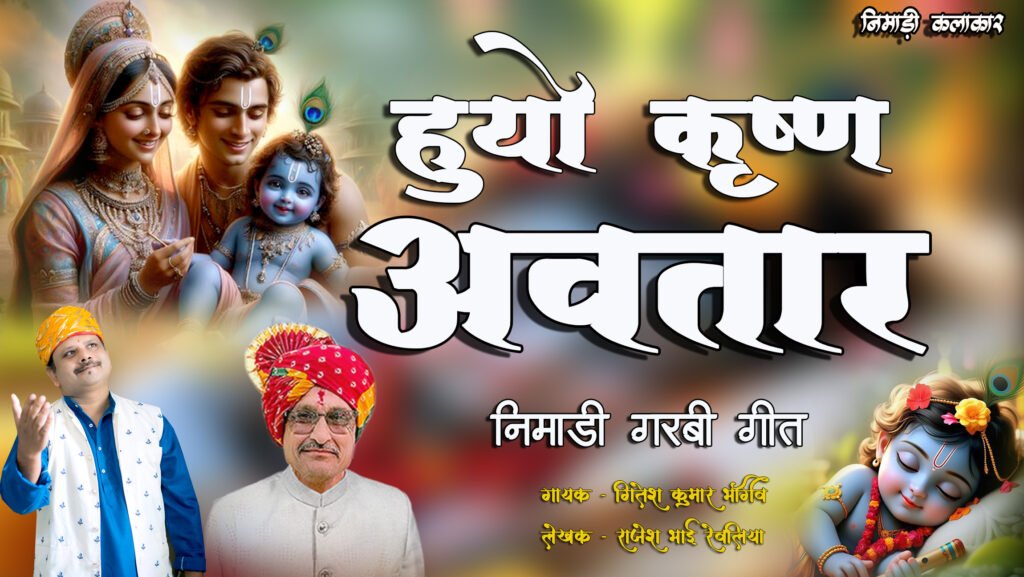
हुयो कृष्ण अवतार – निमाड़ी कृष्णा जन्म लावणी गीत लिरिक्स
🌸 HUYO KRISHNA AVTAR -NIMADI KRISHNA BHAJAN
Singer / गायक: Gitesh Kumar Bhargava (गीतेश कुमार भार्गव)
Lyrics / लेखक: Rajesh Revaliya (राजेश रेवलिया)
Genre / प्रकार: Nimadi Lokgeet, Krishna Bhajan, Lavani Style
Language / भाषा: Nimadi / Hindi
📖 Song Introduction
यह निमाड़ी लोकगीत भगवान श्रीकृष्ण के जन्मोत्सव (कृष्ण जन्माष्टमी) पर आधारित है।
गीत में नंद बाबा के घर कृष्ण अवतार, गोकुल की खुशी, और यमुना जी की पवित्रता को लावणी शैली में भावपूर्ण ढंग से प्रस्तुत किया गया है।
CLICK TO WATCH SONG ON YOUTUBE
CLICK TO LISTEN SONG ON AMAZON MUSIC
CLICK TO LISTEN SONG ON APPLE MUSIC
🎶 Lyrics
मुखड़ा / Chorus
हुयो कृष्ण अवतार, खुशी हुया नरनार,
बाबा नन्द का द्वार……..!
1️⃣ पहला अंतरा
भादव को महिनो, रात अंधियारी,
जेल म जनम्या किसन मुरारी।
तिथि अष्टमी, दिन बुधवार,
बाबा नन्द का द्वार……..!
2️⃣ दूसरा अंतरा
नंद घर आनंद भयो, जय कन्हैया लाल की,
घोड़ा पालकी, जय हो नंदलाल की।
हुया गोकुल में मंगलाचार,
बाबा नन्द का द्वार……..!
3️⃣ तीसरा अंतरा
इत गोकुल, उत मथुरा नगरी,
बीच म बहती जमुना गहरी।
रया जमुना जी चरण पखार,
बाबा नन्द का द्वार……..!
Huyo Krishna Avtar – English (Roman) Lyrics
Huyo Krishna avtar,
Khushi huya nar-nar,
Baba Nand ka dwar…!
Bhaadav ko mahino, raat andhiyari,
Jail ma janmya Kisan Murari.
Tithi Ashtami, din Budhvar,
Baba Nand ka dwar…!
Nand ghar aanand bhayo,
Jai Kanhaiya Lal ki.
Ghoda palki, jai ho Nandlal ki,
Huyo Gokul ma mangalachar,
Baba Nand ka dwar…!
It Gokul, ut Mathura nagri,
Beech ma bahti Jamuna gahri.
Raya Jamuna ji charan pakhar,
Baba Nand ka dwar…!
🌸 “हुयो कृष्ण अवतार” – विस्तृत हिन्दी भावार्थ
यह निमाड़ी लोकगीत भगवान श्रीकृष्ण के पावन अवतार और कृष्ण जन्माष्टमी की दिव्य घटना का भावपूर्ण वर्णन करता है। गीत लावणी शैली में रचा गया है, जिसमें लोकभाषा की सरलता, भक्ति और आनंद का सुंदर समन्वय दिखाई देता है।
🔹 मुखड़ा की व्याख्या
“हुयो कृष्ण अवतार, खुशी हुया नरनार, बाबा नन्द का द्वार”
इस पंक्ति में कवि बताता है कि जब भगवान श्रीकृष्ण का जन्म हुआ, तो केवल गोकुल ही नहीं बल्कि संपूर्ण संसार आनंद से भर उठा। नन्द बाबा के घर जन्म लेने से उनका द्वार स्वयं तीर्थ बन गया और हर व्यक्ति के हृदय में प्रसन्नता छा गई।
🔹 पहले अंतरे की व्याख्या
“भादव को महिनो, रात अंधियारी… तिथि अष्टमी, दिन बुधवार”
यहाँ श्रीकृष्ण के जन्म का काल और समय बताया गया है। भाद्रपद मास की अंधेरी रात, अष्टमी तिथि और बुधवार का दिन—ये सभी विवरण कृष्ण जन्म की ऐतिहासिक और धार्मिक महत्ता को दर्शाते हैं। जेल में जन्म लेकर भी कृष्ण का अवतार दिव्यता और करुणा से परिपूर्ण है।
🔹 दूसरे अंतरे की व्याख्या
“नन्द घर आनंद भयो… गोकुल में मंगलाचार”
कृष्ण जन्म के साथ ही नन्द बाबा के घर और पूरे गोकुल में उत्सव का वातावरण बन जाता है। लोग जयकारे लगाते हैं, घोड़ा-पालकी सजती है और हर ओर मंगल कार्य होने लगते हैं। यह अंतरा गोकुल की सामूहिक खुशी और भक्ति भाव को दर्शाता है।
🔹 तीसरे अंतरे की व्याख्या
“इत गोकुल उत मथुरा… जमुना जी चरण पखार”
इस भाग में गोकुल और मथुरा दोनों को पवित्र बताया गया है। उनके बीच बहने वाली यमुना नदी इतनी पावन मानी गई है कि वह स्वयं श्रीकृष्ण के चरण धोती हुई प्रतीत होती है। यह पंक्ति प्रकृति और ईश्वर के गहरे संबंध को दर्शाती है।
🌼 गीत का समग्र संदेश
यह लोकगीत यह संदेश देता है कि ईश्वर का अवतार केवल एक ऐतिहासिक घटना नहीं, बल्कि आनंद, प्रेम और धर्म की स्थापना का प्रतीक है। निमाड़ी लोकसंस्कृति में कृष्ण जन्म को उत्सव, भक्ति और सामाजिक एकता के रूप में देखा जाता है। गीत सरल शब्दों में गहन आध्यात्मिक भावों को प्रस्तुत करता है।
🌸 “Huyo Krishna Avtar” – Detailed English Explanation
“Huyo Krishna Avtar” is a traditional Nimadi folk song in Lavani style that beautifully narrates the divine birth of Lord Krishna. The song reflects the joy, devotion, and spiritual celebration associated with Krishna Janmashtami, deeply rooted in the folk culture of the Nimad region.
🔹 Explanation of the Chorus
“Huyo Krishna avtar, khushi huya nar-nar, Baba Nand ka dwar”
This line expresses that with the birth of Lord Krishna, happiness spread everywhere. Not only the people of Gokul but all humanity felt blessed. The house of Nand Baba became sacred, as God himself took birth there, turning his doorway into a holy place.
🔹 Explanation of the First Verse
“Bhaadav ko mahino, raat andhiyari… tithi Ashtami, din Budhvar”
This verse describes the exact time of Lord Krishna’s birth. It was the dark night of the Bhadrapada month, on Ashtami tithi, a Wednesday. Even though Krishna was born in a prison, the moment was filled with divine light and spiritual significance.
🔹 Explanation of the Second Verse
“Nand ghar aanand bhayo… Gokul ma mangalachar”
As Krishna reached Gokul, joy filled Nand Baba’s home and the entire village. People celebrated with devotion, chanting praises of Kanhaiya and Nandlal. The atmosphere turned festive with processions, music, and auspicious rituals, symbolizing the victory of joy and righteousness.
🔹 Explanation of the Third Verse
“It Gokul, ut Mathura… Jamuna ji charan pakhar”
This verse poetically connects Gokul and Mathura, the two sacred lands of Krishna. Flowing between them, the River Yamuna is described as lovingly washing the feet of Lord Krishna, symbolizing nature’s devotion and the purity of divine love.
🌼 Overall Message of the Song
The song conveys that the birth of Lord Krishna is not just a historical event, but a spiritual awakening. It represents the triumph of hope, faith, and divine grace. Through simple Nimadi language and folk melody, the song celebrates devotion, cultural heritage, and the eternal bond between God, humanity, and nature.
Nimadi Lokgeet
Krishna Bhajan
Tags:
Huyo Krishna Avtar
Nimadi Krishna Song
Janmashtami Lokgeet
Nimadi Folk Song
Nimadi Krishna Bhajan Lyrics
Krishna Janmashtami Lokgeet
Gitesh Kumar Bhargava Songs
Nimadi Lavani Song
Krishna Avtar Lokgeet
Nimadi Krishna Bhajan
Krishna Janmashtami Lokgeet
Gitesh Kumar Bhargava Songs
Nimadi Lavani Song